
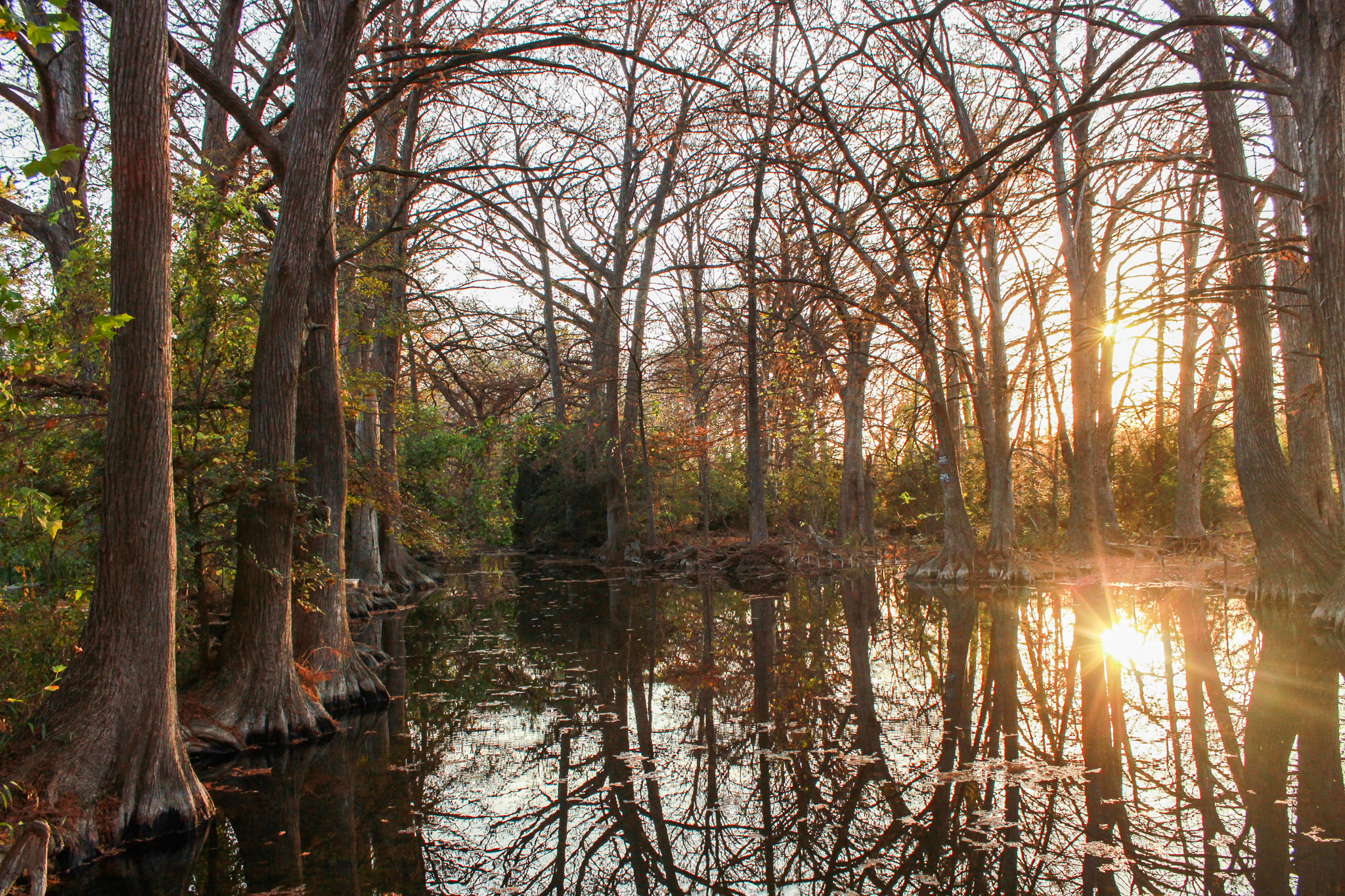
The District entered Stage 3 Exceptional Drought (previously known as Stage IV Exceptional Drought) on October 1, 2025—only the second time we’ve made such a declaration. Now, we are approaching the threshold for Stage 4 Emergency Response Period (ERP), which could be implemented in early 2026 if dry trends continue. These conditions reflect a combination of increasing demand on local aquifers, drought that has persisted since 2022, and the broader impacts of climate change, including higher temperatures and reduced rainfall.
While winter is typically the driest season for Central Texas, this year’s La Niña pattern is expected to bring warmer, drier weather across the state, adding further pressure to already stressed aquifer levels. The District continues to closely monitor Barton Springs flow and the Lovelady well, and we are preparing for the possibility that Stage 4 ERP measures may be needed in the new year.
Meaningful Action
Although this outlook is challenging, there are still meaningful actions each of us can take. Recent Well Owner Spotlights highlight how permittees like Vanessa and Travis Cox and the City of Buda are demonstrating above-and-beyond water conservation leadership. This spring, the District will host an event on rainwater harvesting to help well owners explore practical options for capturing and reusing rainfall. With leaves now falling, residents can also “leave some leaves” to naturally mulch and enrich soils—an easy step that supports healthier landscapes and improves groundwater recharge. And as winter offers a natural pause for ourselves and our yards, it’s an ideal time to plan drought tolerant landscaping changes, such as replacing non-native turf with drought-tolerant, native plants that conserve water and strengthen soil health.
Hearing about deepening drought stages can feel discouraging, but there is still genuine reason for hope. Every conservation effort, large or small, helps protect the aquifers that define the Hill Country we love. Together, we can continue taking steps that support a more resilient water future for our aquifers and greater community.
Rainfall
November was unusually warm across the region, with temperatures running 6 to 9 degrees above normal. It now stands as the second-warmest November on record, surpassed only by 1927.
Rainfall was also limited. The Austin-Hill Country area saw an average of just 0.50 inches between Camp Mabry and ABIA, about 2.3 inches below the long-term monthly average (Figure 1). Rainfall in Central Texas is currently about 8.5 inches below the year-to-date average. However, the region still faces a deep cumulative deficit of roughly 24.5 inches over the past three years.
Looking ahead, December typically brings about 2.7 inches of rain. However, with ongoing La Niña conditions, climatologists expect a warmer, drier winter. This means below-average rainfall is likely to continue through the end of the year and into early 2026.
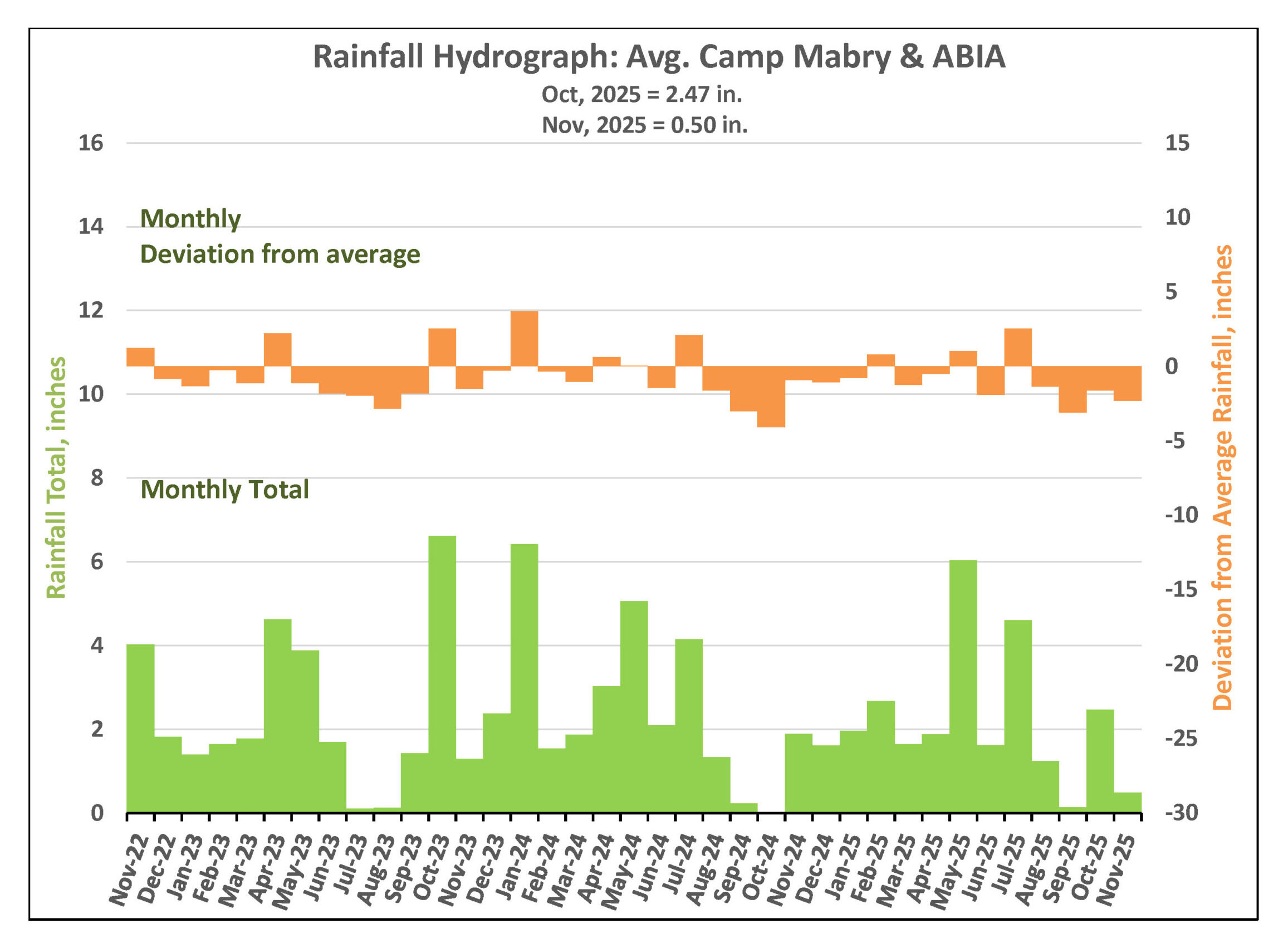
Figure 1. Monthly deviation from average and monthly total rainfall in District’s territory.
Drought Triggers and Status
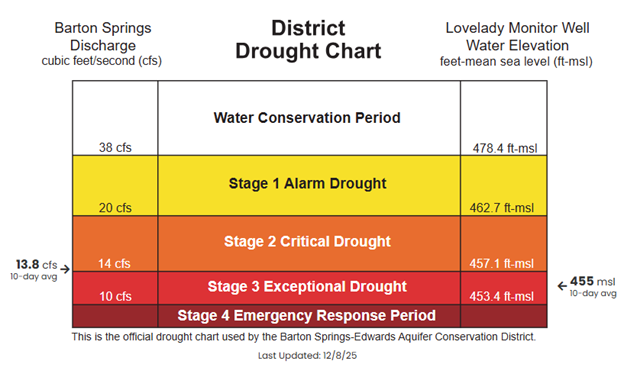
District Drought Chart as of November 10, 2025 displaying 10-day averages for springflow at Barton Springs (left) and groundwater levels at Lovelady monitor well (right)—both of which play a role in determining the District’s drought stage.
Barton Springs Flow
As of December 10, the 10-day average flow at Barton Springs is about 13.8 cubic feet per second (cfs) – just 3.8 cfs above the Stage 4 Emergency Response threshold (Figure 2). The District has never reached Stage 4 Emergency Response, but without meaningful rainfall, Barton Springs flows could drop into that range in early 2026.
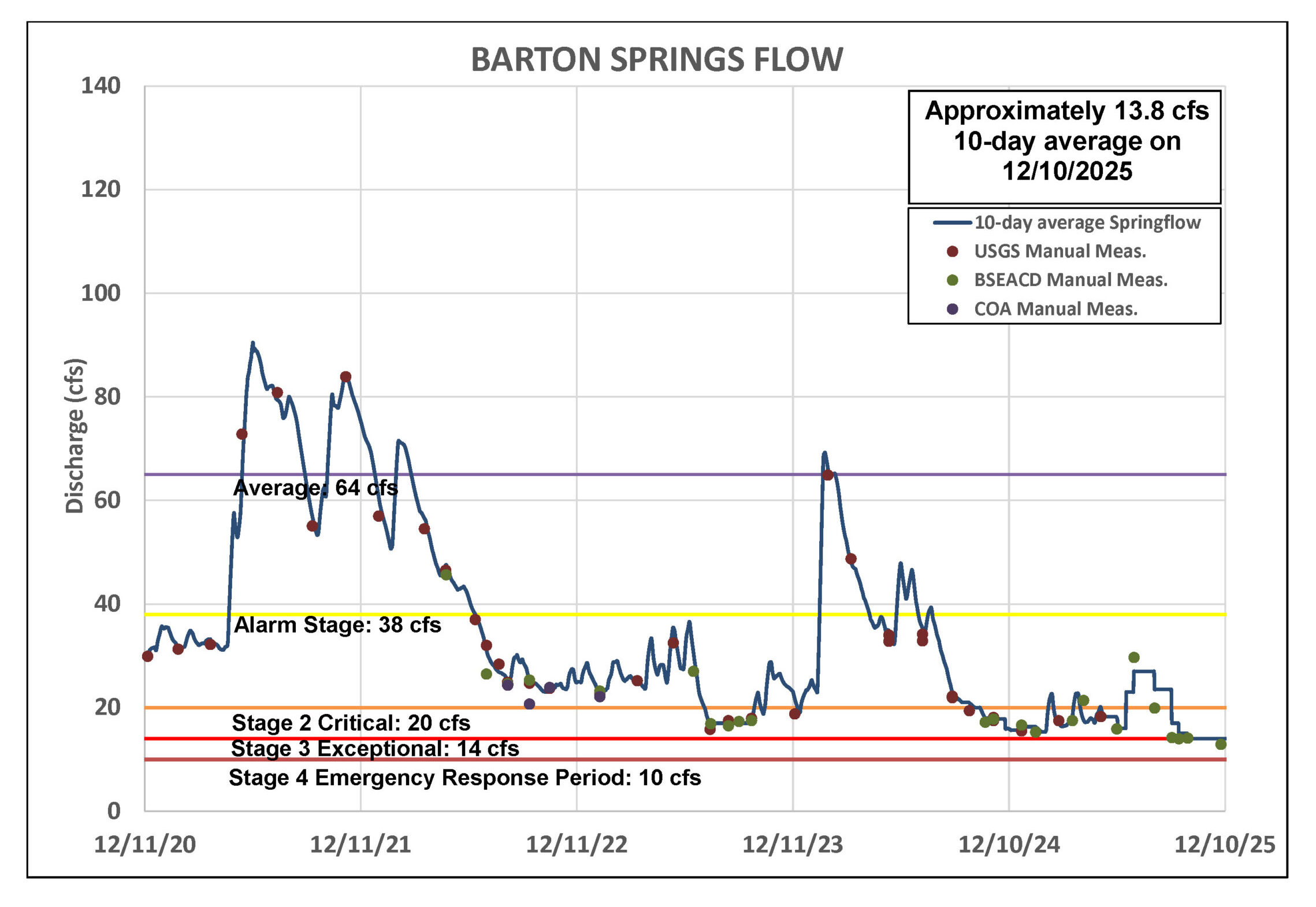
Figure 2. Barton Springs flow for the last five years.
*Note: Recent data for Barton Springs looks blockier than earlier, smoother records because it’s based on the average of two recent manual measurements, rather than continuous USGS gauge data.
Lovelady Monitor Well
As of December 10, the 10-day average water level at the Lovelady well is 455.0 feet above mean sea level (ft-msl), which is within the Stage 3 Exceptional Drought range but is only 1.6 feet above the Stage 4 Emergency Response threshold (Figure 3). Like Barton Springs, water levels could slip into Stage 4 Emergency Response in early 2026 if significant rainfall does not arrive.
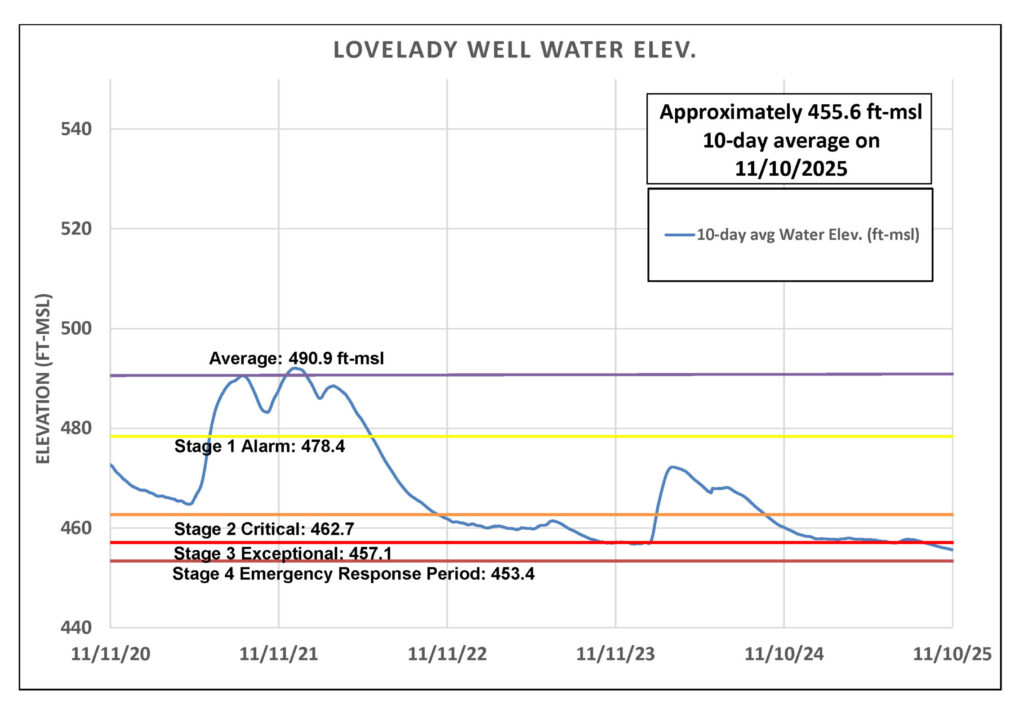
Figure 3. Lovelady groundwater level over the last five years.
Trinity Aquifer
The Lowe-Coronado Middle Trinity monitor well continues to show a steep decline in groundwater levels, reaching new lows (Figure 4). This downward trend mirrors conditions across the region, including in the overlying Upper Trinity Aquifer.
As of December 10, the 10-day average flow at Jacob’s Well Spring (JWS) is just 0.00 cubic feet per second (cfs). The Blanco River at Wimberley is maintaining flows between 6-8 cfs.
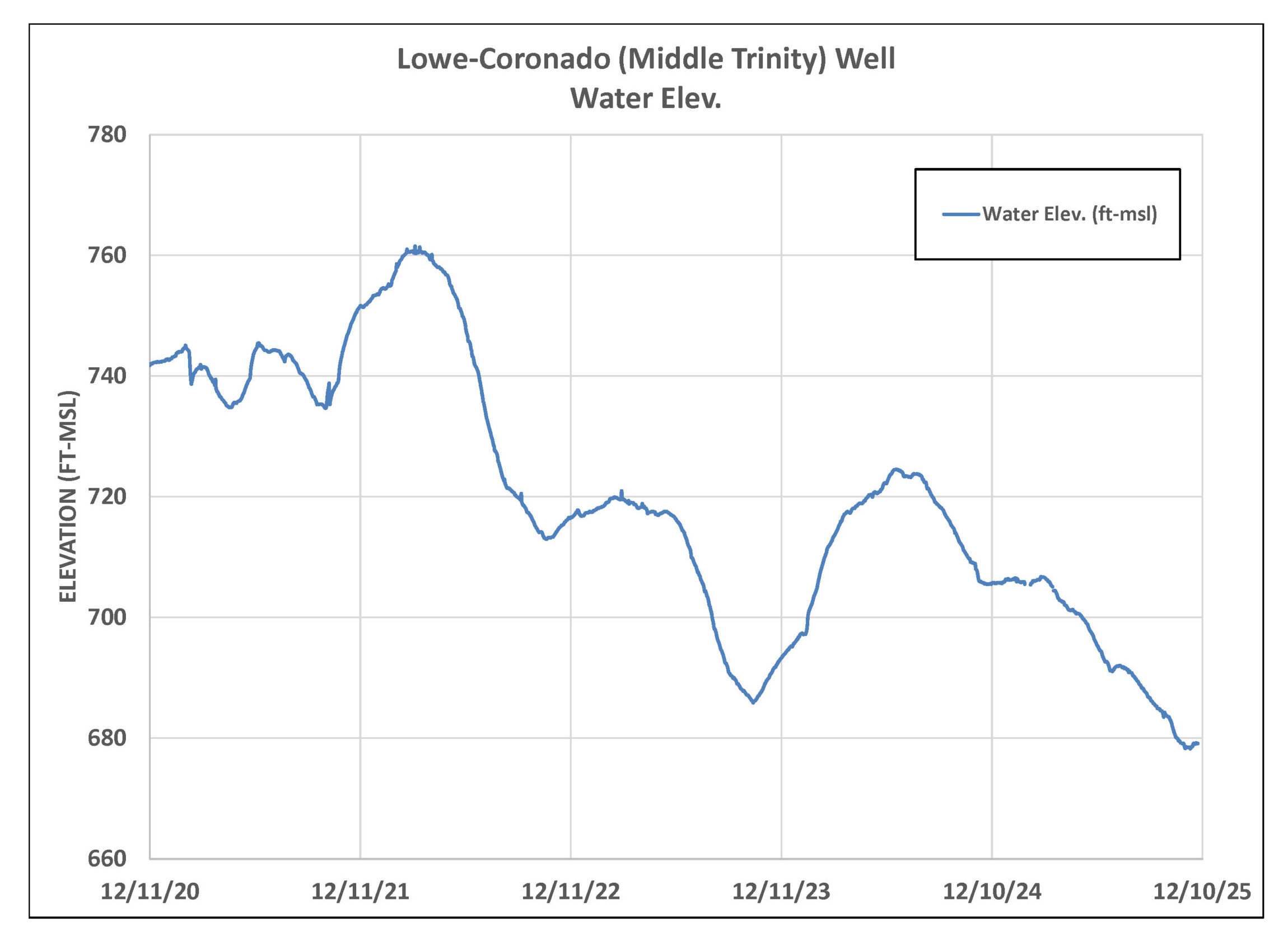
Figure 4. Lowe-Coronado (Middle Trinity) monitor well water-level elevation.