
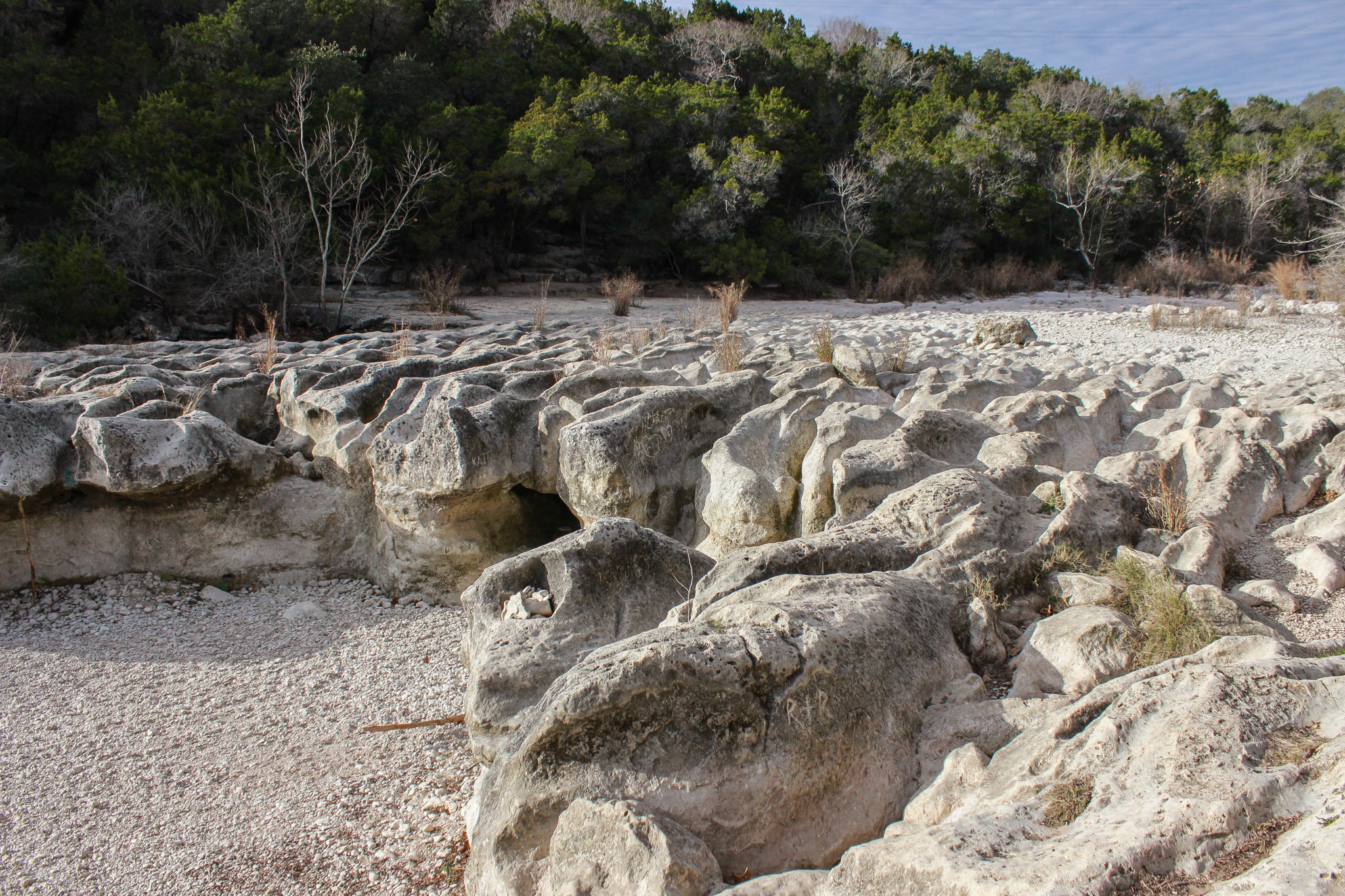
Photo of a dry Sculpture Falls on Barton Creek. This is one of the many creeks in the area that, when flowing, provide recharge to the Barton Springs segment of the Edwards Aquifer.
The Barton Springs–Edwards Aquifer Conservation District (District) warns well owners that groundwater conditions within the District are approaching historic low levels. If current drought conditions persist, a Stage 4 Emergency Response Period (ERP) declaration will be issued for the first time in the District’s 39-year history.
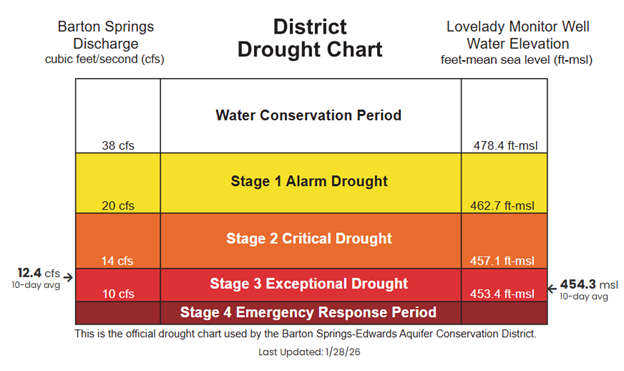
The District has been operating under Stage 3 Exceptional Drought since October 2025 and, as of January 2026, has remained in continuous drought for 43 consecutive months with no sign of relief. While the region received some rainfall this week, drought conditions persist. The winter precipitation did not produce sustained flow in creeks and streams within aquifer recharge zones—an essential process for replenishing groundwater supplies.
The region’s persistent drought is caused by four years of year-after-year below-average rainfall, record-breaking high temperatures, and rapid increases in demand caused by growth. All these factors contribute to an overdraft on the region’s limited groundwater resources.
The District’s drought stages are determined using the 10-day average of two primary indicators:
- Groundwater levels at the Lovelady Monitor Well in south Austin
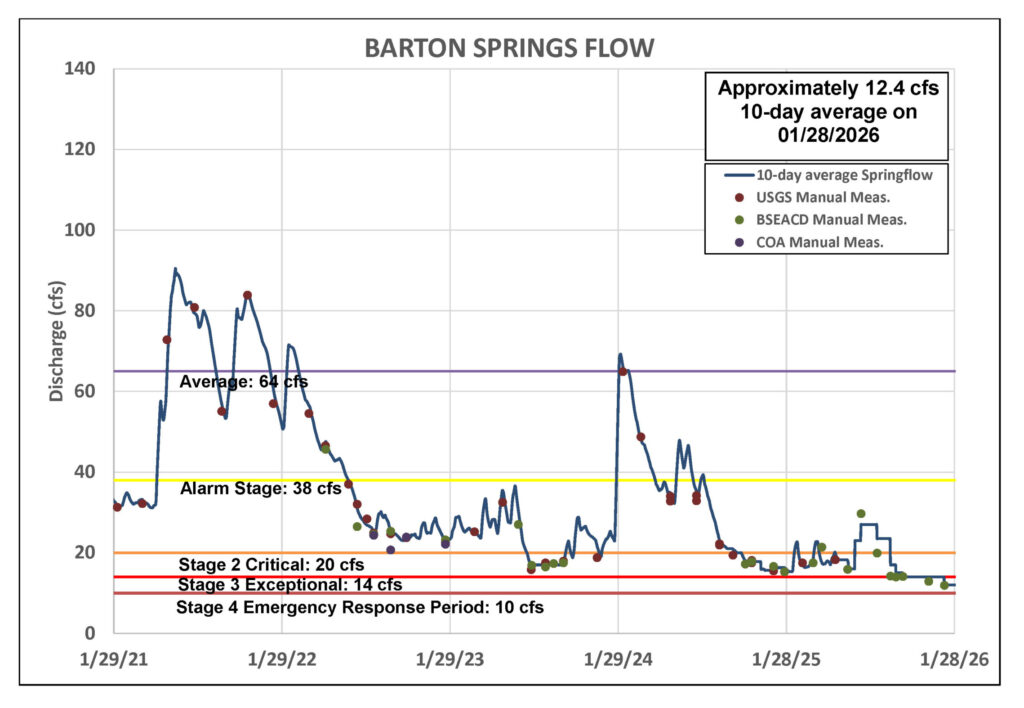
- Flow rates at Barton Springs
If current dry conditions persist, groundwater levels at the Lovelady Monitor Well could cross the threshold for Stage 4 ERP declaration as soon as late March. Barton Springs flow is currently less than a quarter of its historical average. A new drought stage is triggered when either indicator falls below its set threshold. Both indicators must recover above their thresholds before the aquifer can exit a drought stage.
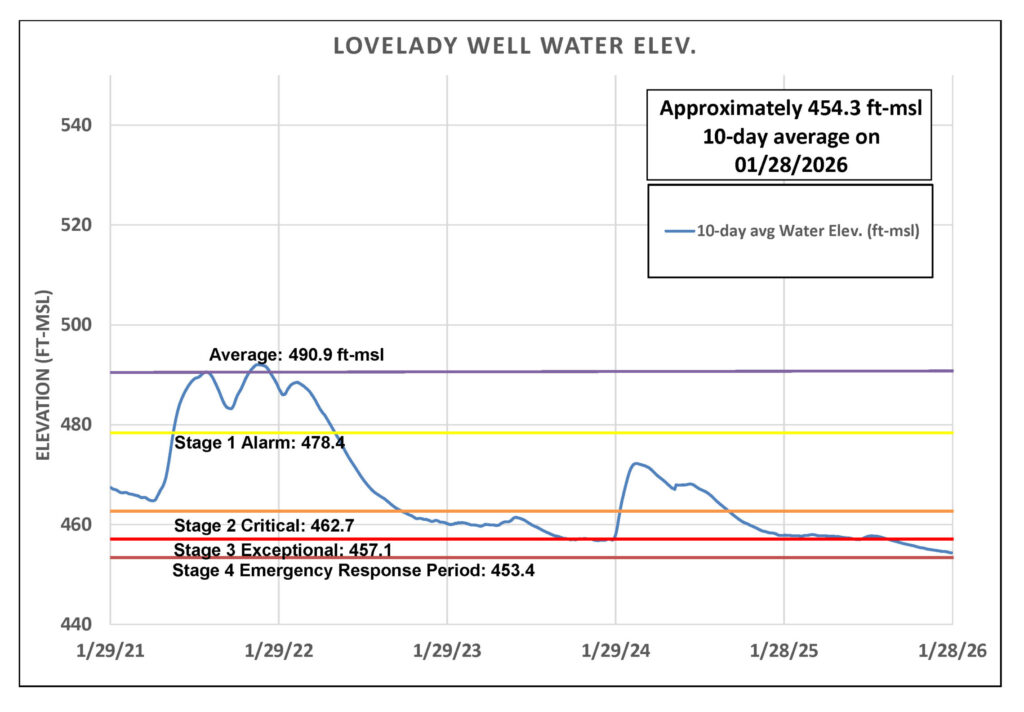
Similar declines in groundwater levels are being observed in wells in the Edwards and Trinity aquifers throughout the District and Hill Country-wide.
The District manages groundwater resources for the Barton Springs segment of the Edwards Aquifer, which supplies water to Barton Springs, as well as a portion of the Trinity Aquifer. Nearly 100,000 people across south Austin, southern Travis County, and eastern Hays County rely on groundwater from within the District’s territory for drinking water.
These groundwater resources support thousands of well owners and more than 120 permittees, including water providers such as the Cities of Buda and Kyle, Creedmoor Maha Water Supply Corporation, businesses, and agricultural users.
A Stage 4 Emergency Response Period would require significantly increased pumping curtailments for many permittees to protect local water wells, maintain spring-flow at Barton Springs, and ensure the long-term sustainability of the region’s groundwater resources.
“Thousands and thousands of households between Austin and San Marcos depend on well water for their daily needs,” said Charlie Flatten, General Manager of the District. “It is critical that we cut back on outdoor use and conserve for indoor use only.”
District staff are closely monitoring aquifer conditions and will continue to provide updates to permittees, elected officials, and the public as conditions evolve. Additional information about drought status, groundwater conditions, and District rules is available at www.bseacd.org.