
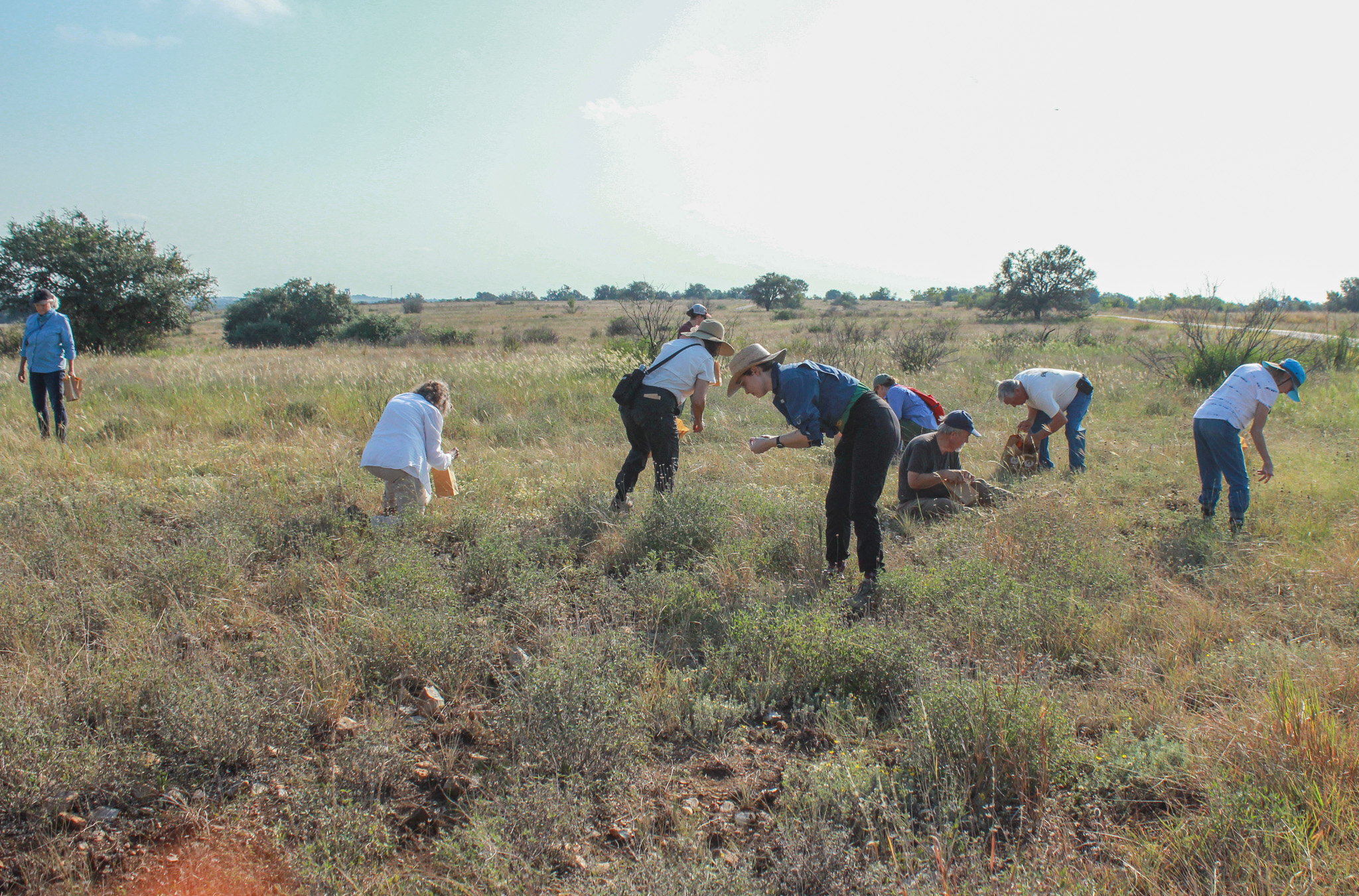
Volunteers collecting seeds on a section of the Austin Water’s Water Quality Protection Lands | October 2025
People associate clean air and water with broad expanses of natural landscape for a reason. Clean water and air begin on clean land. Undisturbed, healthy landscapes provide many of the properties that we rely on for clean air and water.
Threats to Our Local Aquifer
Austin, Buda, Kyle, and the surrounding areas are experiencing rapid growth and have been for years. As new neighborhoods and businesses emerge, natural landscapes are being replaced with roofs, roads, and other impermeable surfaces. When water can’t enter the ground, aquifers can’t recharge. This has consequences for the Barton Springs segment of the Edwards Aquifer, which the District oversees.
The porous limestone structure of the Edwards Aquifer makes it vulnerable to pollution, particularly in areas with increased development. Contaminants from the surface, like fertilizer, oil, and bacteria, can easily enter the groundwater supply, threatening the drinking water of nearly 100,000 people and the water that feeds Barton Springs.
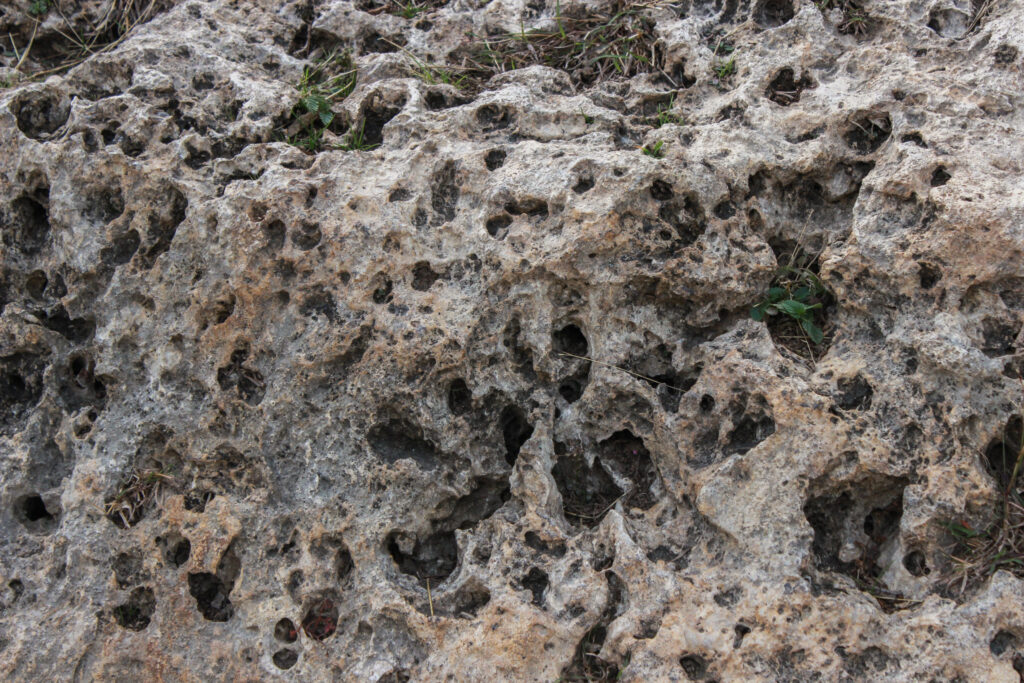
Closeup of the pores in Edwards limestone along the Barton Creek Greenbelt | January 2025
What are Austin Water’s Water Quality Protection Lands?
To protect this critical resource, the people of Austin took action. In 1998, voters approved funding to purchase land and conservation easements across the recharge zone aimed at safeguarding the water quality and quantity in the Barton Springs segment of the Edwards Aquifer. This initiative led to the creation of Water Quality Protection Lands (WQPL) a program managed by Austin Water Wildland Conservation.
The WQPL protects large tracts of land within this region that play a vital role in recharging the aquifer. Today, more than 35,000 acres are permanently protected through the program. Of this total, about 23,000 acres are safeguarded through conservation easements, which allow the land to remain privately owned while limiting future development. Altogether, the WQPL protects about 28% of the recharge zone for the Barton Springs segment of the Edwards Aquifer.
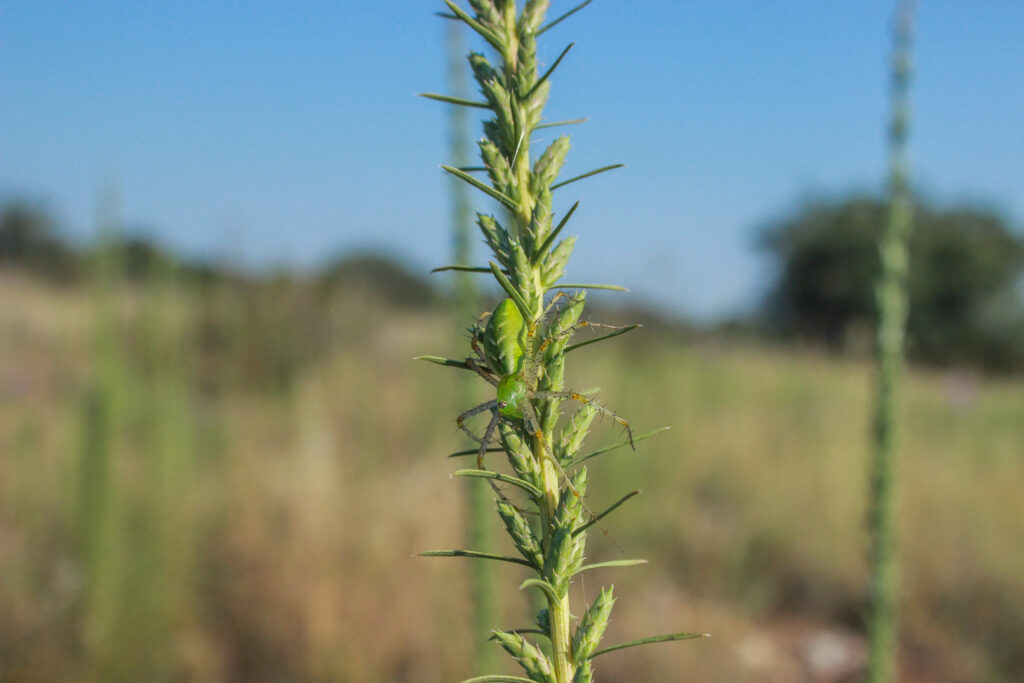
Green lynx spider on a portion of Austin Water’s Water Quality Protection Lands in Hays County | October 2025
Benefitting People and Wildlife
The WQPL is more than a land preservation effort. By restoring native grassland savannas and riparian corridors, the program enhances the landscape’s ability to infiltrate water back into the aquifer. Native vegetation can act as a natural buffer in a karst landscape, where thin soils and porous limestone mean the water quality entering the aquifer is what comes out at our springs and wells. These restoration efforts also provide critical habitat for native wildlife and support research that deepens our understanding of local ecosystems.
Beyond environmental protection, the WQPL connects people with nature. Austin Water Wildland Conservation offers opportunities for the community to get involved, from volunteering to collect native seeds to joining guided hikes that explore the unique geology and ecology of the region. Some wildland areas feature public trails for hiking and birdwatching, while others remain restricted to safeguard fragile habitats and rare species. District staff regularly collaborate with Austin Water’s Wildland Conservation staff to lead outreach events for all ages throughout the region. From cave tours to continuing education for educators, our teams work to teach the community about the importance of the Edwards Aquifer and the impact every one of us has on it.
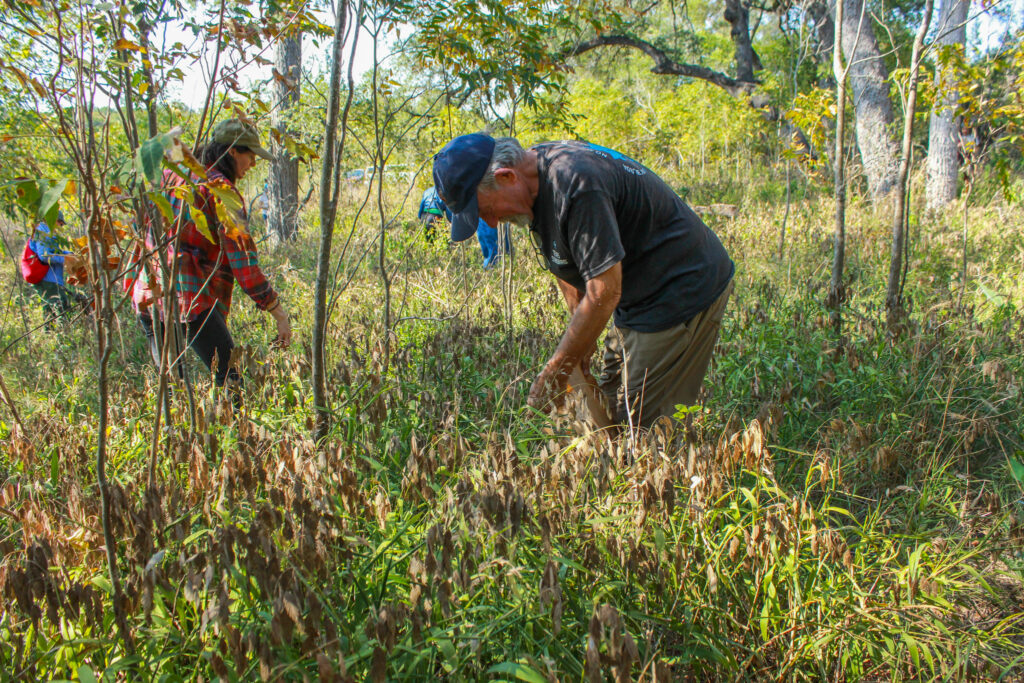
Volunteers collecting inland sea oats seeds on Austin Water’s Water Quality Protection Lands | October 2025
By preventing overdevelopment, supporting healthy ecosystems, and maintaining the natural systems that sustain clean water, the Water Quality Protection Lands help to protect Barton Springs, and the aquifer that feeds it, for generations to come. To learn more about these protected lands visit www.austintexas.gov/WQPLstory. To sign up for free guided hikes and volunteer workdays visit www.austintexas.gov/wildlandevents.