

As we start a new year, I’d like to introduce myself as the new General Manager of the Barton Springs-Edwards Aquifer Conservation District. Many of you know me from my long tenure as the (former) General Manager of the Hays Trinity Groundwater Conservation District in western Hays County; or if you’ve been in the area long enough, you may be riding one of the many thousands of bicycles my shop sold or serviced from the 1980s through the mid 2000s.
I consider it an honor to serve the District, its award-winning staff of groundwater professionals, its Board of Directors, and most importantly, the tens of thousands of folks in the area who rely on water wells for their daily household needs.
The community has entered 2026 under extraordinary drought conditions combined with unprecedented population growth. The combination of abnormally low rain and abnormally high new demand presents water supply challenges and opportunities.
Area gauges show a 40-inch rainfall deficit over the last four years. The index wells that measure our local water levels are at or near historic lows and sinking. Springflow that supplies downstream users is similarly at historic low points. Upstream springs like Jacobs Well Spring in Wimberley and the many springs along Onion, Slaughter, and Barton creeks have been dry for over a year now.
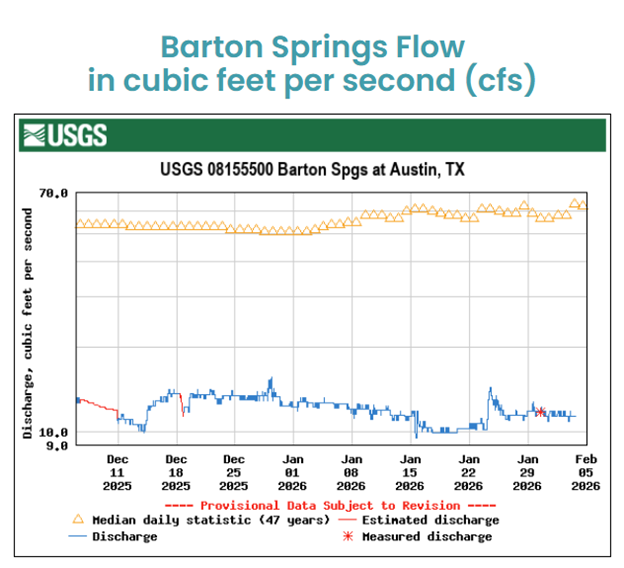
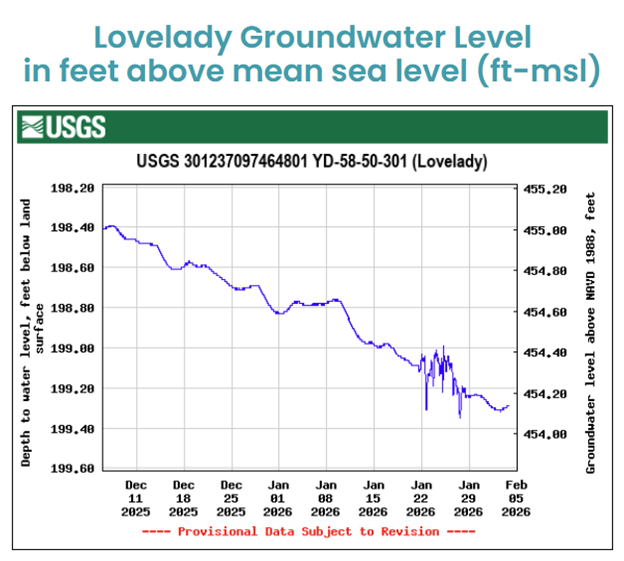
For these reasons, the District is on the verge of declaring the most severe drought stage in its nearly 40-year history.
The tens of thousands of people who rely on aquifers in the region are cutting back on outdoor use to save those gallons for indoor use in the months ahead. In the meantime, the District is providing guidance on water well health, household and commercial conservation, and our local utilities are preparing to make some hard decisions on how to implement their drought management plans.
Folks are watching local well levels and actively finding ways to stretch the dwindling water supply. At least one local business is getting serious about its plans to desalinate previously unusable water for household use. Several local water suppliers have diversified their water portfolios with aquifer storage and recovery systems. Rainwater harvesting for lawn and garden, and even household use, is booming across the Hill Country. Companies that produce atmospheric water harvesters that turn humidity into drinking water are selling systems to supplement commercial and domestic water supplies.
It is wonderful to see area well owners and utilities chipping in to do their part to protect our precious water supplies. The District’s Staff and Board of Directors remain diligent in its pursuit of conservation and aquifer science.
Until the rains return, the District and the community will support each other to make every drop of water count. Please keep an eye on our drought and conservation web pages for the latest information.
Thank you,
Charlie Flatten, General Manager
BSEACD